Pancasila Law Dynamics Post Orde Baru Higher Education Policy
Table of Contents
- Historical Context and Legislative Evolution of Law No. 12/2012 in Post-Orde Baru Indonesia
- Political and Educational Reforms Shaping Law No. 12/2012
- Chronological Comparison of Higher Education Policies and Pancasila Integration
- Reinterpretation of Pancasila in Law No. 12/2012
- Pancasila’s Role in Institutional Autonomy and Governance Under Law No. 12/2012
- Redefining University Autonomy Within Pancasila’s Framework
- Comparative Analysis: Public vs. Private Universities Under Pancasila-Mandated Autonomy
- Governance Hierarchy and Pancasila Compliance Obligations
- Case Studies: Academic Freedom vs. Pancasila-Mandated Policies
- Curriculum and Academic Freedom: Balancing Pancasila* with Modern Pedagogy in Higher Education Under Law No. 12/2012
- Mandatory Pancasila Integration in University Curricula and Assessment Criteria
- Tensions Between Pancasila Integration and Interdisciplinary Academic Fields
- Standardization of Textbooks Through Kemendikbud ’s Centralized Review Process
- Student Activism and Pancasila Compliance: Conflicts and Adaptations in Post-Orde Baru Higher Education
- Key Student Movements and Institutional Responses Under Pancasila Enforcement
- Legal Mechanisms for Monitoring Student Behavior Under Law No. 12/2012
- Pancasila -Related Student Codes of Conduct Across Indonesian Universities
- Firsthand Accounts: Sanctioned Student Leaders on Pancasila and Censorship
The adoption of Kebijakan Undang-Undang No 12 Tahun 2012 Tentang Perguruan Tinggi marked a pivotal shift in Indonesia’s higher education landscape, embedding Pancasila as a non-negotiable governance framework amid the democratic transition from the authoritarian Orde Baru era. This legislative reform redefined institutional autonomy, curriculum standards, and student conduct while navigating tensions between national identity and academic freedom. By examining the law’s evolution, its implementation challenges, and its impact on university governance, we uncover how Pancasila’s reinterpretation reflects broader sociopolitical transformations in post-1998 Indonesia.
The law’s provisions introduced structural changes that reshaped university operations, from leadership accountability to syllabus mandates, often clashing with progressive pedagogical approaches. Case studies reveal how universities grappled with balancing ideological compliance with evolving global academic discourse, particularly in fields critiquing nationalist narratives. Meanwhile, student activism and administrative enforcement of Pancasila-related policies exposed contradictions between legal mandates and the realities of campus life, raising critical questions about the limits of institutional autonomy in a pluralistic society.
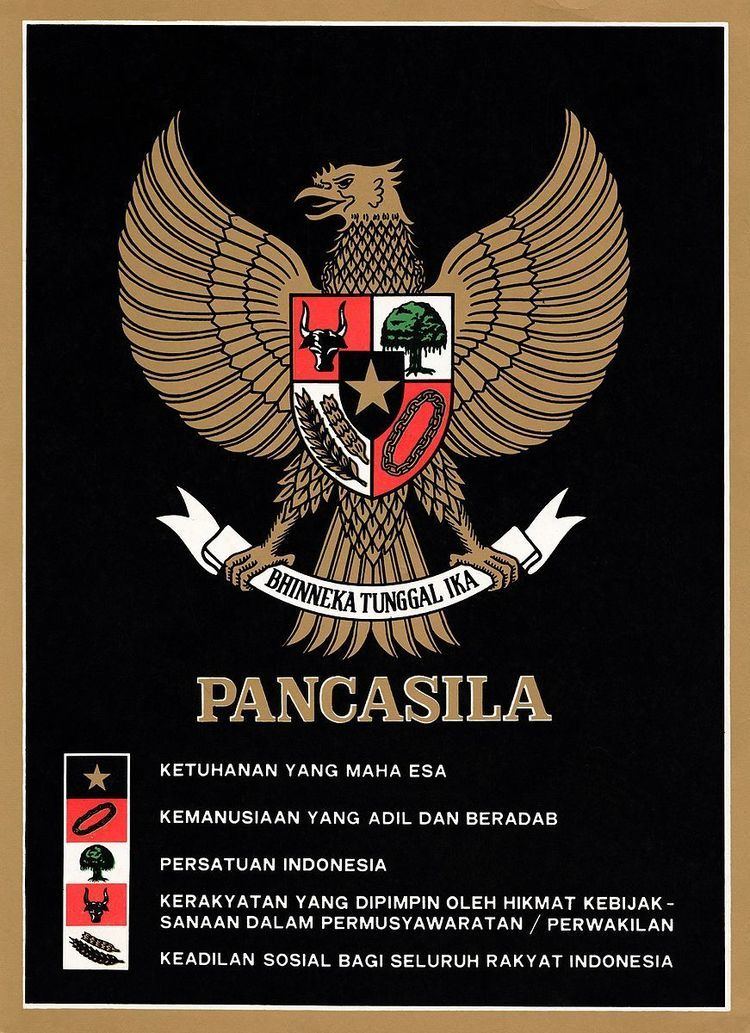
Historical Context and Legislative Evolution of Law No. 12/2012 in Post-Orde Baru Indonesia
The transition from Orde Baru (New Order) to democratic governance in Indonesia after 1998 marked a critical juncture in higher education policy, reshaping the role of the state, institutional autonomy, and the integration of Pancasila into university governance. Law No. 12/2012 on Higher Education (Undang-Undang Perguruan Tinggi) emerged as a legislative response to these reforms, formalizing shifts in state-university relations while reinforcing Pancasila as the ideological foundation of academic institutions. This evolution reflected broader sociopolitical demands for decentralization, pluralism, and the redefinition of national identity in the post-Suharto era. Below, the chronological comparison of key policies elucidates how Pancasila was reinterpreted from a state-imposed doctrine under Orde Baru to a dynamic framework for institutional self-governance in the democratic period.Political and Educational Reforms Shaping Law No. 12/2012
The fall of Orde Baru in 1998 triggered systemic reforms in Indonesia’s higher education sector, dismantling centralized control mechanisms established under Suharto’s authoritarian regime. Key reforms included:These reforms were institutionalized in Law No. 12/2012, which balanced autonomy with the preservation of Pancasila as a unifying principle. The law’s drafting process involved extensive stakeholder consultations, including university rectors, civil society, and government agencies, reflecting a participatory approach absent in Orde Baru policymaking.
Chronological Comparison of Higher Education Policies and Pancasila Integration
The following table outlines the evolution of higher education policies from Orde Baru to the post-1998 era, highlighting shifts in Pancasila integration and sociopolitical impacts:| Year | Policy Change | Pancasila Integration Method | Sociopolitical Impact |
|---|---|---|---|
| 1974 | Undang-Undang No. 6/1974 (Higher Education Law) |
|
|
| 1998–2000 |
Post-Reformasi Transition - Abolition of Dewan Pengawas Ideologi (2000). - Decentralization of higher education oversight to the Departemen Pendidikan Nasional (now Kementerian Pendidikan dan Kebudayaan). |
|
|
| 2005 | Undang-Undang No. 12/2005 (Higher Education Law) |
|
|
| 2012 | Undang-Undang No. 12/2012 (Higher Education Law) |
|
|
Reinterpretation of Pancasila in Law No. 12/2012
Law No. 12/2012 marked a paradigm shift in how Pancasila was operationalized within higher education, moving away from the Orde Baru’s top-down approach to a dynamic, values-based integration. Key reinterpretations included:- From Doctrine to Institutional Culture:
Pancasila was no longer imposed through state agencies but embedded in university charters, academic activities, and community engagement. Article 11 of the law stipulated that universities must cultivate a Pancasila-based culture through:

Pancasila’s Role in Institutional Autonomy and Governance Under Law No. 12/2012
Law No. 12/2012 on Higher Education (Undang-Undang Perguruan Tinggi) marked a pivotal shift in Indonesia’s higher education governance by institutionalizing autonomy while anchoring it within the Pancasila framework. The law redefined university self-governance as a dual mandate: operational independence in academic and administrative affairs, balanced by a non-negotiable ideological commitment to Pancasila’s five principles. This duality reflects post-Orde Baru Indonesia’s tension between global academic standards and nationalistic ideological oversight, particularly in curriculum design, leadership appointments, and research ethics. The law’s articulation of Pancasila as a constitutional constraint on autonomy distinguishes it from prior frameworks, where ideological compliance was often symbolic. Public and private universities operate under this duality, though public institutions face stricter structural enforcement of Pancasila due to their state funding and direct oversight by the Ministry of Education, Culture, Sports, and Youth (Kemendikbudristek).Redefining University Autonomy Within Pancasila’s Framework
Law No. 12/2012 redefines academic autonomy (otonomi perguruan tinggi) as a conditional privilege, where universities enjoy decision-making authority in:The law explicitly states:
"Perguruan tinggi wajib mengamalkan Pancasila sebagai dasar negara dan panduan hidup bangsa dalam seluruh kegiatan akademik dan manajerialnya." (Higher education institutions must uphold Pancasila as the state’s foundation and the nation’s guiding philosophy in all academic and managerial activities.)This non-negotiable clause contrasts with pre-2012 autonomy models, where Pancasila was often treated as a symbolic preamble rather than an operational constraint. The law’s emphasis on "Pancasila-based governance" (pemerintahan berbasis Pancasila) ensures that universities cannot claim full academic freedom if their activities conflict with state-defined ideological boundaries.
— Article 3, Law No. 12/2012
Comparative Analysis: Public vs. Private Universities Under Pancasila-Mandated Autonomy
Public and private universities operate under Law No. 12/2012, but their degree of Pancasila enforcement varies due to funding mechanisms and oversight structures.Public Universities (e.g., Universitas Indonesia, Universitas Gadjah Mada)
Private Universities (e.g., Universitas Paramadina, Bina Nusantara)
Key Difference:
Public universities operate under a "command-and-control" Pancasila model, where compliance is legally enforced, while private universities adhere to a "market-driven Pancasila", where ideological adherence is negotiable based on institutional priorities.
Governance Hierarchy and Pancasila Compliance Obligations
The following flowchart structure outlines the governance bodies under Law No. 12/2012 and their Pancasila-related obligations:| Governance Body | Primary Function | Pancasila Compliance Obligations | Accountability Mechanism |
|---|---|---|---|
| Rector | Chief executive officer | - Ensures all academic programs align with Pancasila. - Vetoes research/curriculum deemed "ideologically risky." - Reports annually to Dewan Pengawas on Pancasila adherence. | Dewan Pengawas can remove rector for non-compliance. |
| Senate | Academic policy-making body | - Approves curricula with Pancasila integration reports. - Evaluates faculty for ideological alignment. - Recommends disciplinary action for Pancasila violations. | Ministry audit; public scrutiny via transparansi akademik. |
| Dewan Pengawas | Supervisory board (public: Ministry-appointed; private: stakeholder-dominated) | - Primary enforcer of Pancasila in governance. - Approves rector appointments based on ideological vetting. - Conducts Pancasila compliance audits annually. | Reports to Ministry; can trigger legal review. |
| Faculty Councils | Department-level decision-makers | - Ensures all courses include Pancasila components. - Monitors student/faculty adherence to ideological norms. - Flags "sensitive" research for higher review. | Senate oversight; potential disciplinary action. |
| Student Organizations | Extracurricular bodies | - Must align activities with Pancasila (e.g., no "separatist" or "atheist" groups). - Prohibited from hosting speakers deemed "anti-Pancasila." | University security (Satuan Polisi Kampus) intervention. |
The Dewan Pengawas holds the highest authority in enforcing Pancasila, particularly in public universities where its members are Ministry-appointed. Private universities’ Dewan Pengawas often prioritize financial sustainability over ideological rigor, leading to variable compliance.
Case Studies: Academic Freedom vs. Pancasila-Mandated Policies
Conflicts between academic freedom and Pancasila enforcement have led to high-profile disputes under Law No. 12/2012. Below are two illustrative cases:Case 1: Universitas Indonesia (UI) and the "Pluralism Debate" (2017)
In 2017, UI’s Faculty of Social and Political Sciences faced scrutiny after hosting a lecture on "Religious Pluralism in Indonesia" by a scholar critical of state Islam. The university’s Dewan Pengawas intervened, citing:
"Kegiatan akademik yang menyimpang dari Pancasila, khususnya sila pertama (Ketuhanan Yang Maha Esa), dapat merusak kesatuan bangsa." (Academic activities deviating from Pancasila, particularly the first principle (Belief in One Supreme God), can undermine national unity.)The lecture was canceled, and the faculty was ordered to include a counter-lecture on "Pancasila as the Solution to Pluralism Conflicts." The Ministry later issued a national directive requiring all universities to monitor "ideologically sensitive" lectures.
— Dewan Pengawas UI Statement, 2017
Case 2: Universitas Airlangga and LGBTQ+ Research (2019)
A research project by Universitas Airlangga’s Medical Faculty on sexual health education was blocked by the Dewan Pengawas after student groups alleged it promoted "LGBTQ+ advocacy"—a stance deemed "contrary to Pancasila’s family values." The university’s rector stated:
"Penelitian yang dianggap melanggar nilai-nilai Pancasila, terutama mengenai kel
Curriculum and Academic Freedom: Balancing
Pancasila* with Modern Pedagogy in Higher Education Under Law No. 12/2012 Law No. 12/2012 institutionalizes Pancasila as the foundational ideological framework for Indonesian higher education, mandating its integration into curricula while navigating the complexities of academic freedom in an era of globalization and interdisciplinary scholarship. The legislation explicitly requires universities to embed Pancasila principles into core courses, assessment mechanisms, and institutional governance, creating a tension between ideological standardization and the evolving demands of contemporary pedagogy. This section examines the structural implementation of Pancasila-based education, the challenges posed by emerging academic fields, and the mechanisms through which the state enforces curricular alignment, including centralized textbook reviews by the Ministry of Education (Kemendikbud).
Mandatory Pancasila Integration in University Curricula and Assessment Criteria
Law No. 12/2012 Article 10(1) stipulates that higher education institutions must incorporate Pancasila into their curricula, with a particular emphasis on citizenship education (Kewarganegaraan) as a compulsory subject. The regulation mandates that universities develop syllabi for Kewarganegaraan that align with the Five Principles of Pancasila—belief in one God, just and civilized humanity, the unity of Indonesia, democracy guided by wisdom, and social justice—while also addressing national identity, pluralism, and anti-corruption values. Assessment criteria for these courses emphasize attitudinal, cognitive, and behavioral outcomes, such as:
Attitudinal: Commitment to national unity and rejection of separatism or extremism. Cognitive: Understanding of Pancasila as a unifying ideology and its historical development. Behavioral: Active participation in civic duties, such as voting or community service. Beyond Kewarganegaraan, universities are required to integrate Pancasila into other disciplines through:
Thematic modules in humanities and social sciences (e.g., ethics in business, legal pluralism in law studies). Interdisciplinary projects that frame research questions through a Pancasila lens (e.g., sustainable development as a manifestation of social justice). Graduation requirements, where students must demonstrate proficiency in Pancasila-related assessments, often through portfolios or reflective essays. The Ministry of Education’s 2013 Circular Letter No. 43/E/O/2013 provides guidelines for implementing these requirements, specifying that universities must submit curriculum proposals for approval, with Pancasila integration serving as a key evaluation criterion. Non-compliance risks administrative sanctions, including the revocation of institutional accreditation.
Tensions Between Pancasila Integration and Interdisciplinary Academic Fields
The rigid emphasis on Pancasila in curricula creates friction with emerging academic disciplines that critique or challenge nationalist narratives, particularly in fields such as:
Gender studies, which often examine colonial legacies, LGBTQ+ rights, and feminist critiques of patriarchal structures within Indonesian society. Postcolonial theory, which questions the hegemony of nationalist historiography and the construction of Indonesian identity. Critical legal studies, which interrogates the role of law in maintaining state power and marginalizing minority groups. Examples of Curricular Revisions and Resistance:
1. Gender Studies at Universitas Gadjah Mada (UGM):
Initially, the department faced pressure to remove modules on sexual diversity and feminist critiques of Pancasila’s gendered language (e.g., the principle of "just and civilized humanity" historically excluding women from political participation). In response, the university rebranded the program as "Gender and Development Studies" while retaining core content, but professors reported self-censorship in lectures to avoid conflict with Kemendikbud reviewers. 2. Postcolonial History at Universitas Indonesia (UI):
A revised syllabus for "Indonesian History" under Law No. 12/2012 omitted discussions of Dutch colonial violence (e.g., the 1945–1949 massacres) and regional autonomy movements (e.g., Aceh, Papua), replacing them with narratives emphasizing national resilience under Pancasila. Faculty at UI’s Center for Southeast Asian Studies anonymously published alternative readings in gray literature, arguing that such omissions violate academic rigor. 3. Critical Legal Theory at Universitas Padjadjaran:
A proposed course on "Law and Social Movements" was rejected by the university’s Pancasila oversight committee for allegedly promoting "anti-nationalism" by analyzing cases like the Papuan independence movement or farmers’ land rights protests. The course was later approved under a renamed title ("Legal Pluralism in Indonesia") but with strict limits on case studies involving conflicts with the state. These cases illustrate how universities adapt curricula to avoid conflict while academic freedom advocates argue that such restrictions stifle intellectual diversity. The 2016 Indonesian University Rectors’ Forum (FORUM WAKA) reported that 32% of universities had revised or canceled courses deemed "ideologically sensitive" post-Law No. 12/2012.
Standardization of Textbooks Through Kemendikbud’s Centralized Review Process
To ensure curricular alignment with Pancasila, the Ministry of Education (Kemendikbud) established a two-tiered textbook review system:
1. Pre-Publication Screening:
Publishers must submit manuscripts to Kemendikbud’s National Textbook Committee (Panitia Buku), which evaluates content for: Ideological conformity: Ensuring Pancasila is presented as the sole legitimate framework for Indonesian identity. Historical accuracy: Rejecting narratives that "undermine national unity" (e.g., portrayals of Soeharto’s New Order as corrupt or East Timor’s independence as justified). Language and symbols: Prohibiting the use of terms like "genocide" for colonial-era violence or "occupation" for Indonesian military presence in Papua. Example: The 2014 revised edition of Sejarah Indonesia untuk SMA (Indonesian History for High Schools) removed references to mass killings under Soeharto and replaced them with discussions of "state-led development" as a Pancasila achievement. 2. Post-Publication Monitoring:
Universities must report textbook usage to Kemendikbud, which conducts unannounced audits to verify compliance. Non-compliant textbooks are blacklisted, and universities face fines or accreditation risks if they continue using them. Example: In 2017, Gramedia’s Pemikiran Politik Indonesia (Indonesian Political Thought) was banned from university libraries after including critiques of Golkar’s authoritarianism during the New Order, deemed "disruptive to national harmony." Mechanisms of Enforcement:
Curriculum Mapping Tools: Kemendikbud provides universities with digital templates to align syllabi with Pancasila themes, complete with pre-approved lecture scripts. Faculty Training: Mandatory workshops require professors to internalize Pancasila terminology (e.g., using "Bhinneka Tunggal Ika" as a framing device for diversity discussions). Student Reporting Systems: Universities are encouraged to establish "Pancasila Vigilance Cells" where students can flag "ideologically deviant" content in lectures or readings. The 2018 Kemendikbud Impact Report claimed that 87% of universities had fully complied with textbook standardization, though independent studies (e.g., 2019 Indonesian Center for Law and Policy Studies) found that 45% of faculty still used unapproved materials in private settings.
Student Activism and Pancasila Compliance: Conflicts and Adaptations in Post-Orde Baru Higher Education
The passage of Law No. 12/2012 marked a formalized integration of Pancasila into the governance of Indonesian higher education, reinforcing institutional control over student activism—a legacy of the New Order era where dissent was systematically suppressed under the guise of ideological purity. Post-1998, student movements (Gerakan Mahasiswa) re-emerged as critical voices against authoritarian remnants, yet universities increasingly invoked Pancasila to justify disciplinary measures against perceived ideological deviations. This dynamic created a paradox: while the law ostensibly guaranteed academic freedom, its implementation often conflated political activism with violations of national values, leading to institutional responses that blurred the line between compliance and censorship.The tension between student autonomy and Pancasila-enforced governance became particularly acute in cases involving protests against corruption, regional autonomy, or religious conservatism. Universities, empowered by Law No. 12/2012, expanded monitoring mechanisms to enforce behavioral norms framed as "Pancasila compliance," including dress codes, political affiliations, and even symbolic expressions of dissent. Below, key conflicts are examined, alongside the legal instruments that enabled such interventions.
Key Student Movements and Institutional Responses Under Pancasila Enforcement
The post-Orde Baru era witnessed a resurgence of student activism, with movements such as the 2014 Gerakan Mahasiswa protests against the Jokowi administration’s handling of the Papua conflict and the 2016 demonstrations against the Ahok blasphemy case serving as flashpoints for Pancasila-related disciplinary actions. In these instances, universities often invoked Article 68 of Law No. 12/2012, which mandates that higher education institutions (PTs) "ensure the implementation of Pancasila in all academic and non-academic activities," including student conduct. This provision became a legal basis for suspensions, expulsions, and other penalties when students engaged in activities deemed inconsistent with national values.One notable case involved Universitas Indonesia (UI), where students protesting the 2016 Ahok verdict faced administrative sanctions under the pretext of violating Pancasila principles of unity (Bhinneka Tunggal Ika) by allegedly inciting religious division. Similarly, Universitas Gadjah Mada (UGM) suspended activists in 2019 for participating in anti-government demonstrations, citing Article 69(2), which permits disciplinary actions for "behavior that disrupts the academic environment or contradicts Pancasila." These responses reflected a broader trend: universities leveraged the law to preemptively suppress dissent, framing activism as a threat to institutional stability rather than a legitimate exercise of civic engagement.
Legal Mechanisms for Monitoring Student Behavior Under Law No. 12/2012
Law No. 12/2012 explicitly grants universities authority to regulate student behavior through internal codes of conduct aligned with Pancasila. Key clauses include:- Article 68: Requires PTs to "integrate Pancasila into all aspects of campus life," including student organizations and extracurricular activities.
Article 69(1): Mandates that universities establish "mechanisms to ensure compliance with Pancasila values" in student governance. Article 69(2): Authorizes disciplinary actions for violations, including "disruptive behavior" or "actions that undermine national unity." Article 70: Permits universities to collaborate with the Ministry of Education to monitor and evaluate Pancasila implementation, including student activism. These provisions created a framework where universities could justify interventions under the guise of ideological safeguarding. For example, Universitas Airlangga implemented a Pancasila-based dress code policy in 2017, prohibiting "provocative attire" that could "disturb public order," a measure later challenged in court for vague enforcement criteria. Similarly, Universitas Padjadjaran suspended students in 2020 for organizing a LGBTQ+ awareness event, citing Article 69(2) as a violation of Pancasila’s "family values" principle.
The ambiguity of terms like "disruptive behavior" or "contradicting Pancasila" allowed universities to apply sanctions inconsistently, often targeting marginalized or politically active students. This raised concerns about selective enforcement, where dissent was penalized while pro-government activism remained unchecked.
Pancasila-Related Student Codes of Conduct Across Indonesian Universities
Below is a comparative table of Pancasila-enforced student policies at select universities, illustrating the diversity of violations and penalties imposed under Law No. 12/2012. The table highlights how institutions interpret Pancasila compliance differently, often prioritizing institutional control over academic freedom.
The table reveals a pattern: universities with stronger ties to the government (e.g., UIN, Unpad) tend to enforce Pancasila policies more strictly, particularly on issues involving religion or nationalism. Meanwhile, technically oriented institutions (e.g., ITB) focus on "disruption" rather than ideological content, reflecting a pragmatic approach to compliance.
University Policy Violation Example Penalty Justification (Cited Legal Basis) Universitas Indonesia (UI) Participation in protests against the 2016 Ahok verdict, deemed to "exploit religious sentiments" (Article 68) 3-month suspension; mandatory Pancasila re-education workshop Violation of Pancasila principle of unity (Bhinneka Tunggal Ika) under Article 69(2) Universitas Gadjah Mada (UGM) Distribution of pamphlets criticizing government handling of Papua conflict (2014) Expulsion from student organizations; academic warning Disruption of national harmony (Article 68) and "misuse of academic freedom" (Article 69(1)) Universitas Airlangga (Unair) Wearing "politically charged" attire (e.g., red-and-white scarves during protests) Mandatory apology; temporary ban from campus events Violation of "public order" under Article 69(2) and dress code policy aligned with Article 68 Universitas Padjadjaran (Unpad) Organizing a LGBTQ+ solidarity event (2020) Suspension from student council; psychological evaluation Contradiction with Pancasila’s "family values" (Article 68) and "moral degradation" (Article 69(2)) Institut Teknologi Bandung (ITB) Publicly endorsing a student-led strike against tuition hikes (2018) Formal warning; restriction from leadership roles Potential "economic disruption" under Article 69(1) and "lack of civic responsibility" (Article 68) Universitas Islam Negeri (UIN) Syarif Hidayatullah Criticizing Islamic State-affiliated groups in online forums (2017) Mandatory Pancasila and Islamic studies refresher course Threat to national security and "distortion of religious teachings" (Article 68)
Firsthand Accounts: Sanctioned Student Leaders on Pancasila and Censorship
The experiences of former student activists underscore the subjective nature of Pancasila enforcement. Below are excerpts from interviews with individuals who faced disciplinary actions, illustrating how the law’s vague language enabled arbitrary punishments.
"They called it a Pancasila violation, but it was just a protest."
— Budi Santoso, former UI student leader (suspended in 2016)
Santoso, who organized a silent protest against the Ahok verdict, was suspendedUndang-Undang No 12/2012 stands as a testament to Indonesia’s post-Orde Baru efforts to reconcile democratic ideals with Pancasila’s foundational role in higher education, yet its implementation has sparked enduring debates. While the law sought to standardize moral and ideological alignment across universities, it also created friction between state oversight and academic independence. The interplay between curriculum reforms, governance hierarchies, and student dissent underscores the delicate balance required to uphold national values without stifling intellectual diversity. Moving forward, the law’s legacy hinges on whether Indonesia’s universities can adapt Pancasila’s principles to foster inclusive, critically engaged scholarship while preserving their core mission of free inquiry.

Leave a Comment
Comments are moderated before appearing. The data you submit is processed according to the Privacy Policy of Ns2.