Iran's Strategic Influence and Internal Challenges
Table of Contents
- Iran’s Geopolitical Role and Regional Influence in the Middle East
- Strategic Alliances and Military-Economic Partnerships
- Timeline of Major Geopolitical Interventions and Their Outcomes
- Nuclear Program and Sanctions: Diplomatic Leverage and Economic Workarounds
- Domestic Governance and Societal Dynamics in Iran
- Political Structure: Authority, Factionalism, and Power Balances
- Protests and State Repression: The 2022 Mahsa Amini Uprising and Beyond
- Economic Challenges: Sanctions, Inflation, and the Rise of Informal Economies
- Cultural Exports as Subversive Narratives: Cinema, Music, and Literature
- Education System: Compliance vs. Dissent Through Curriculum and Censorship
- Military and Security Apparatus in Iran
- Composition and Capabilities of the Islamic Revolutionary Guard Corps (IRGC)
- Asymmetric Warfare Tactics: Drones, Proxies, and Cyber Operations
- Evolution of Iran’s Ballistic Missile Program Post-JCPOA
Iran stands at a pivotal intersection of geopolitical ambition and domestic turbulence, where its regional alliances and military prowess clash with internal dissent and economic constraints. As a key player in Middle Eastern conflicts, Iran’s strategic partnerships—spanning Syria, Yemen, and Lebanon—have reshaped power dynamics while its nuclear program and sanctions evasion tactics continue to test global diplomacy. Domestically, the regime faces mounting pressure from youth-led protests and economic hardship, yet its cultural exports and education system reveal both compliance mechanisms and quiet resistance. The interplay between Iran’s hardline governance and evolving societal demands underscores a nation navigating survival amid escalating regional and international tensions.
The country’s influence extends beyond conventional warfare, with its Islamic Revolutionary Guard Corps (IRGC) employing asymmetric tactics, from drone strikes to cyber espionage, while its nuclear infrastructure remains a flashpoint for deterrence. Meanwhile, internal governance—marked by the Supreme Leader’s authority and the Guardian Council’s electoral oversight—balances hardliners and reformists in a fragile equilibrium. Economic sanctions have forced adaptations in trade and technology, yet inflation and unemployment persist, fueling unrest. This duality of external assertiveness and internal fragility defines Iran’s contemporary trajectory, where every policy decision carries weight in both regional stability and domestic legitimacy.

Iran’s Geopolitical Role and Regional Influence in the Middle East
Iran’s strategic positioning in the Middle East is rooted in a complex web of alliances, ideological alignments, and military interventions designed to counter Western dominance and expand its sphere of influence. Since the 1979 Islamic Revolution, Iran has cultivated partnerships with state actors, non-state militias, and regional powers to project power across the Levant, the Arabian Peninsula, and the Gulf. These alliances are underpinned by shared anti-Israel and anti-U.S. narratives, economic cooperation, and military support, often resulting in proxy conflicts that reshape regional security dynamics. Iran’s leverage is further amplified by its nuclear program, which, despite sanctions and diplomatic setbacks, remains a critical tool for negotiating its geopolitical standing.The following analysis examines Iran’s key alliances, historical interventions, and the interplay between its nuclear ambitions, sanctions, and diplomatic strategies. It also contrasts the foreign policy approaches of successive administrations and assesses Iran’s role in the Israel-Palestine conflict as a linchpin of its broader regional strategy.
Strategic Alliances and Military-Economic Partnerships
Iran’s regional influence is sustained through a dual-track approach: state-to-state alliances and support for non-state armed groups. The former includes formal defense and economic agreements, while the latter relies on financial, logistical, and training assistance to militias that align with Tehran’s objectives.State Alliances:
Iran’s closest partners are Syria, Iraq, and Lebanon, with Syria serving as a critical land bridge for Iranian military and intelligence operations. The 2015 military intervention in Syria solidified this axis, with Iran deploying the Islamic Revolutionary Guard Corps (IRGC) Quds Force, Hezbollah fighters, and Shiite militias to prop up Bashar al-Assad’s regime. Economic ties with Iraq, particularly through energy and trade corridors, have also deepened, despite periodic tensions over border disputes and political influence. In Lebanon, Iran maintains dominance over Hezbollah, which it funds and arms as a primary proxy force against Israel.
Non-State Actors:
Iran’s most influential proxies include:
Economic Dimensions:
Iran’s alliances are not solely military; economic cooperation plays a pivotal role. Trade with Iraq (via informal border crossings) and energy deals with Syria (despite sanctions) illustrate Tehran’s efforts to bypass sanctions. The China-Iran Comprehensive Cooperation Agreement (2021) further diversifies Iran’s economic resilience, with China investing in oil, infrastructure, and technology in exchange for Iranian energy exports. Additionally, Iran has explored cryptocurrency transactions (e.g., through the National Payment System) to circumvent U.S. sanctions, though these remain limited in scale.
Timeline of Major Geopolitical Interventions and Their Outcomes
Iran’s interventions in regional conflicts have had lasting consequences, often destabilizing neighboring states while reinforcing its role as a counterbalance to Saudi Arabia and Israel. Below is a structured overview of key engagements:| Year | Conflict/Region | Iran’s Role | Impact on Stability |
|---|---|---|---|
| 1980–1988 | Iran-Iraq War | Direct military confrontation with Saddam Hussein’s Iraq, backed by Western powers (U.S., France). Iran suffered ~1 million casualties but emerged with a hardened revolutionary identity. | Weakened Iraq’s regional dominance, paved the way for Iran’s post-war expansionism in Lebanon and later Syria. |
| 2006–2008 | Lebanon (Hezbollah-Israel War) | Hezbollah, armed and funded by Iran, engaged Israel in a 34-day war, firing 4,000+ rockets into Israel. Iran provided real-time intelligence and missile systems. | Hezbollah’s resilience deterred future Israeli invasions, cementing Iran’s proxy model. Israel’s military limitations exposed vulnerabilities in its deterrence strategy. |
| 2011–Present | Syrian Civil War | Iran deployed IRGC forces, Hezbollah fighters, and Shiite militias (e.g., Liwa Fatemiyoun) to support Assad. Estimated Iranian military expenditure in Syria: $6–14 billion (per U.S. estimates). | Prevented Assad’s collapse, but prolonged the war, displaced 13+ million Syrians, and entrenched Iranian-Syrian-Hezbollah axis. Increased U.S.-led coalition airstrikes targeting Iranian-backed forces. |
| 2014–Present | Yemen (Houthi Conflict) | Iran provided ballistic missiles, drones (e.g., Qasef-1), and training to Houthis, who targeted Saudi Arabia (e.g., 2019 Abqaiq-Khurais attack). | Forced Saudi Arabia to divert military resources, weakened its regional hegemony. Prolonged Yemen’s humanitarian crisis (233,000+ deaths per UN). |
| 2019–Present | Iraq (Anti-U.S. Protests & Militia Attacks) | Iran-backed militias (e.g., Kata’ib Hezbollah) launched rocket attacks on U.S. bases (2019–2020), killing American contractors. Iran also influenced Iraqi political factions to resist U.S. presence. | Accelerated U.S. troop withdrawals, reduced American footprint in Iraq. Strengthened Iran’s influence over Iraqi security institutions. |
Nuclear Program and Sanctions: Diplomatic Leverage and Economic Workarounds
Iran’s nuclear program remains a cornerstone of its foreign policy, used as both a diplomatic bargaining chip and a sanctions evasion mechanism. The Joint Comprehensive Plan of Action (JCPOA, 2015) temporarily eased sanctions in exchange for nuclear rollbacks, but the U.S. withdrawal in 2018 and subsequent "maximum pressure" campaign forced Iran to adopt dual-track strategies: escalating nuclear activities while circumventing sanctions through alternative economic channels.Key Developments:

Domestic Governance and Societal Dynamics in Iran
Iran’s domestic governance operates within a hybrid system blending theocratic authority, political factionalism, and societal resistance. The Supreme Leader (Rahbar) holds ultimate power under the 1979 Constitution, overseeing state security, foreign policy, and judicial independence, while the Guardian Council (Shora-ye Negahban) acts as a veto body for legislation and elections. This structure creates a tension between hardline clerics, reformist factions, and a youth-driven opposition increasingly vocal despite systematic repression. Economic stagnation, fueled by sanctions and mismanagement, exacerbates social unrest, while cultural exports—films, music, and literature—serve as both mirrors and challenges to regime narratives.Political Structure: Authority, Factionalism, and Power Balances
Iran’s governance is structured around dual sovereignty: the Supreme Leader (Ali Khamenei) and the elected President (Ebrahim Raisi), with the former’s authority enshrined in Article 57 of the Constitution. The Guardian Council, composed of six clerics and six jurists, vets candidates for elections and legislation, ensuring compliance with Islamic principles. This system marginalizes reformist voices, as seen in the 2021 parliamentary elections, where only 40% of eligible candidates passed vetting.The balance of power fluctuates between:
"The Guardian Council’s role is not just to guard but to gatekeep—effectively determining who can participate in the political process, not who wins it." — Amir Handjani, Iran Expert, Chatham HouseA responsive HTML table outlining key institutions and their roles:
| Institution | Role | Key Figures/Examples |
|---|---|---|
| Supreme Leader | Commander-in-Chief, ultimate authority over state policy | Ali Khamenei (since 1989) |
| Guardian Council | Vets legislation/elections for "Islamic compliance" | Ayatollah Ahmad Jannati (Chairman) |
| Assembly of Experts | Elects/removes Supreme Leader (theoretically) | 86 clerics (2024) |
| Revolutionary Guard (IRGC) | Controls military, economy, and internal security | General Hossein Salami (IRGC Commander) |
| Majlis (Parliament) | Legislative body, but subject to Guardian Council vetoes | 2024: 290 seats (hardline majority) |
| President | Manages domestic policy, but subordinate to Supreme Leader | Ebrahim Raisi (2021–present) |
Protests and State Repression: The 2022 Mahsa Amini Uprising and Beyond
The 2022 Mahsa Amini protests, triggered by the death of a young Kurdish woman detained for "improper hijab," escalated into the largest anti-regime movement since the 1979 revolution. Over 1,500 protesters were killed (Amnesty International), with 30,000+ arrested (Human Rights Watch). The government’s response involved:Long-term societal impacts:
"The protests were not just about hijab—they were about 40 years of accumulated grievances: economic despair, political repression, and the regime’s inability to deliver basic dignity." — Azadeh Moaveni, Journalist & Author of Iran Awakening
Economic Challenges: Sanctions, Inflation, and the Rise of Informal Economies
Iran’s economy faces chronic stagnation, with inflation at 40%+ (2023), unemployment at 12% (official, likely higher), and 60% youth unemployment. Sanctions (e.g., U.S. CAATSA, EU oil embargo) cripple key sectors:Informal economy adaptations:
"Sanctions don’t just hurt the economy—they create parallel systems where the state’s legitimacy erodes daily. People turn to the black market not out of choice, but out of necessity." — Dariush Zahedi, Economist, University of Tehran
Cultural Exports as Subversive Narratives: Cinema, Music, and Literature
Iran’s cultural exports—films, music, and literature—circumvent censorship by reframing regime narratives through metaphor, exile, and digital dissemination. Examples:Regime countermeasures:
"Art in Iran is a language of resistance. The regime fears it not because it’s subversive, but because it’s undeniable—people consume it despite everything." — Faraz Sanei, Cultural Analyst, Atlantic Council
Education System: Compliance vs. Dissent Through Curriculum and Censorship
Iran’s education system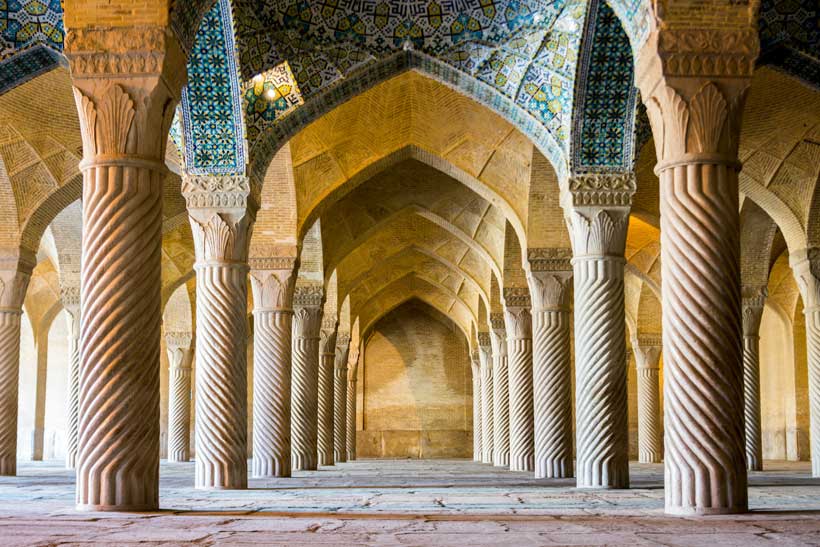
Military and Security Apparatus in Iran
Iran’s military and security architecture is a multifaceted system designed to project power across conventional, asymmetric, and unconventional domains. At its core, the Islamic Revolutionary Guard Corps (IRGC) and its affiliated entities—such as the Quds Force, Basij militia, and cyber warfare units—operate alongside the conventional Artesh (Army of the Islamic Republic of Iran). This structure enables Tehran to balance deterrence against regional adversaries (e.g., Israel, Saudi Arabia) with internal stability while leveraging hybrid warfare tactics to counter perceived threats. The IRGC’s integration into Iran’s defense strategy, particularly its role in asymmetric warfare (e.g., drone strikes, proxy networks, and cyber operations), has redefined the geopolitical calculus in the Middle East, while its ballistic missile program and nuclear infrastructure serve as critical tools for strategic deterrence.Composition and Capabilities of the Islamic Revolutionary Guard Corps (IRGC)
The IRGC, established in 1979 following the Islamic Revolution, functions as both a military force and a political entity, reporting directly to the Supreme Leader. Its structure includes five primary branches: the Ground Forces, Naval Forces, Aerospace Force, Quds Force (external operations), and Basij Resistance Force (volunteer militia). The IRGC’s budget, estimated at $15–20 billion annually (per U.S. Treasury reports), exceeds that of the Artesh, reflecting its prioritization in Iran’s defense strategy. Its capabilities span conventional warfare, asymmetric operations, and intelligence-gathering, with a focus on deniable and proxy-based engagements to avoid direct confrontation with major powers.The IRGC’s Quds Force, led by General Esmail Qaani (since 2020), specializes in foreign operations, including training and arming non-state actors (e.g., Hezbollah, Houthis, Iraqi Shia militias). It employs asymmetric tactics such as:
The Basij Resistance Force, a volunteer militia with millions of members, serves as a mobilization tool for internal security and large-scale conflicts. While primarily used for crowd control during protests (e.g., 2022 Mahsa Amini uprisings), its lightly armed units can be rapidly deployed for guerrilla tactics in hybrid warfare scenarios.
The IRGC’s cyber warfare units, operating under the IRGC Intelligence Organization, conduct state-sponsored hacking campaigns (detailed in a subsequent section). These units integrate with conventional and asymmetric operations, targeting critical infrastructure, military networks, and political dissidents to disrupt adversaries without direct attribution.
Asymmetric Warfare Tactics: Drones, Proxies, and Cyber Operations
Iran’s asymmetric warfare doctrine relies on low-cost, high-impact tactics to neutralize technologically superior adversaries. Key components include:1. Drone Warfare and Missile Attacks
Iran has developed a diverse drone arsenal, ranging from suicide drones (e.g., Shahed-136) to long-range reconnaissance UAVs (e.g., Mohajer-6). These systems are deployed in three primary ways:
Technical Specifications of Key Drones:
| Model | Range | Payload | Notable Deployments |
|---|---|---|---|
| Shahed-136 | 1,200–1,900 km | 40–50 kg (warhead) | Yemen (Houthi attacks on Saudi Arabia) |
| Mohajer-6 | 500–700 km | Reconnaissance | Syria (ISIS surveillance) |
| Kaman-12 | 2,000+ km | Precision-guided | Alleged use in 2023 Israel-Gaza conflict |
The Quds Force maintains training camps in Iraq, Syria, and Lebanon to equip proxies with:
3. Cyber Warfare Integration
Cyber operations are synergized with kinetic attacks to amplify effects. For example:
Evolution of Iran’s Ballistic Missile Program Post-JCPOA
The Joint Comprehensive Plan of Action (JCPOA, 2015) restricted Iran’s ballistic missile program under United Nations Security Council Resolution 2231, prohibiting development of nuclear-capable missiles. However, Iran has circumvented these restrictions through technological advancements and proxy proliferation. Below is a chronological breakdown of key developments:2016–2018: Defiance and Early Violations
2019–2021: Accelerated Development and Regional Escalation
2022–2024: Hypersonic and Maneuverable Re-Entry Vehicles (MaRV)
Iran’s trajectory reflects a complex calculus of survival and influence, where geopolitical maneuvering and domestic repression intersect. Its regional interventions, from Syria to Yemen, demonstrate a calculated strategy to counter U.S. and Israeli dominance, while its nuclear program and sanctions workarounds underscore a determination to preserve sovereignty. Domestically, the regime’s grip tightens amid protests, yet cultural exports and educational policies reveal cracks in its narrative control. The IRGC’s hybrid warfare capabilities and cyber operations further cement Iran’s role as a disruptive force, yet economic stagnation and societal discontent pose enduring challenges. Ultimately, Iran’s future hinges on its ability to reconcile external ambitions with internal cohesion—a delicate balance that will shape the Middle East’s geopolitical landscape for decades.
Leave a Comment
Comments are moderated before appearing. The data you submit is processed according to the Privacy Policy of Ns2.